Woodbridge During the First World War
Images Related to the Zeppelin Raid on Woodbridge
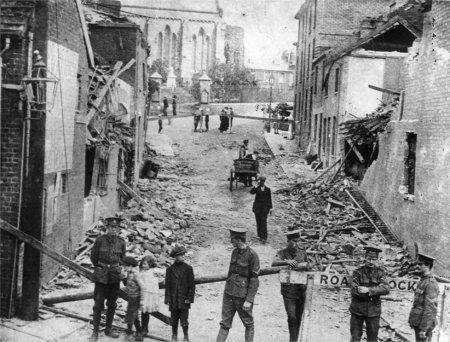
The first of the high explosive bombs dropped by the Naval Zeppelin L10 on the
15th August 1915 caused this destruction on St John's Hill.
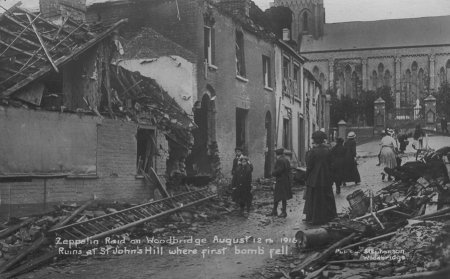
Another view of St John's Hill
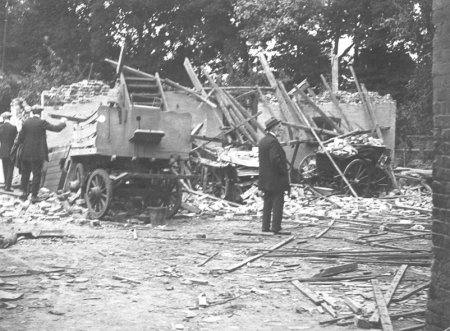
The impact of the bomb which fell behind the Waggon and Horses Public House
on Bredfield Street.
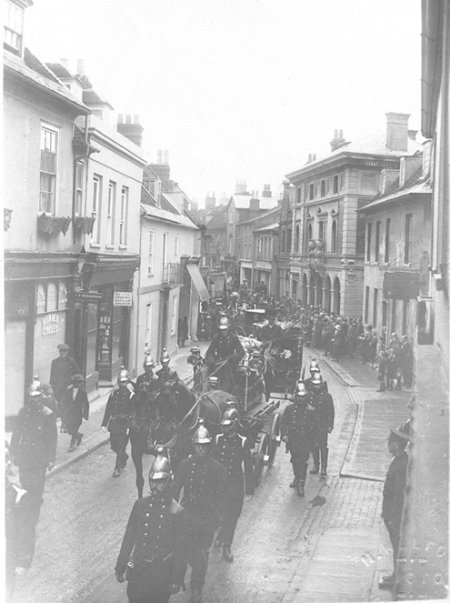
Funeral procession
for the six people who died in the raid.
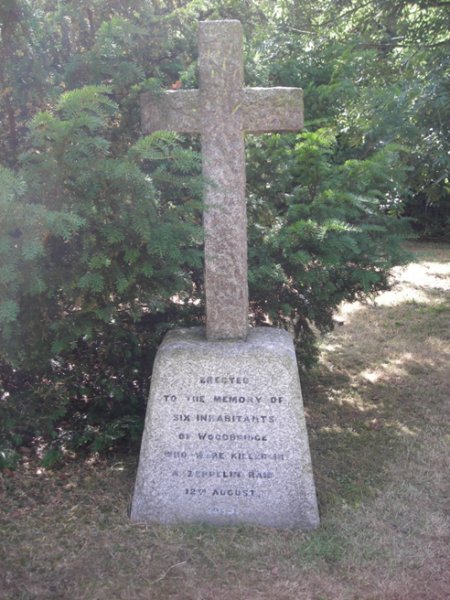
This memorial to the six people who died during the raid
is in the Warren Hill Cemetery.
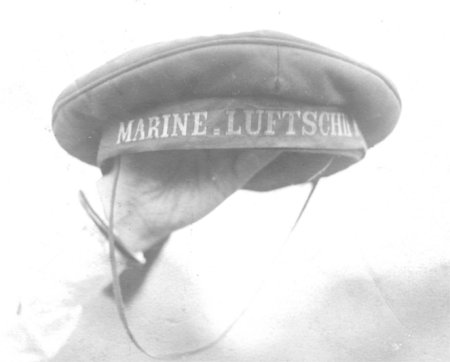
This hat from a midshipman on board the L10 was
found near Castle Street.
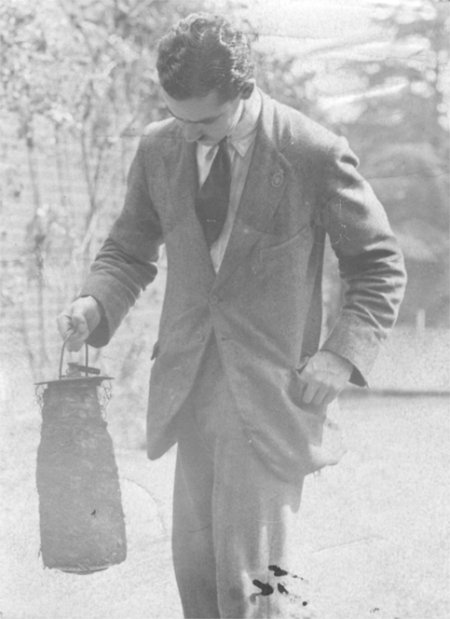
Carefully
carrying a unexploded incendiary bomb.
The reign of terror of the Naval Zeppelin L10 which bombed Woodbridge was short lived. On the afternoon of 3rd September it was on a reconnaissance flight over the North Sea. On its return it could not avoid flying through a thunderstorm and was struck by lightning. It fell in flames into Elbe Estuary. None of the crew of 19 survived.
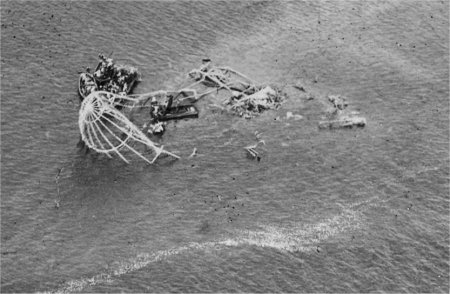
Wreckage of Naval Zeppelin L10 in the Elbe Estuary, 3rd Sep 1915.
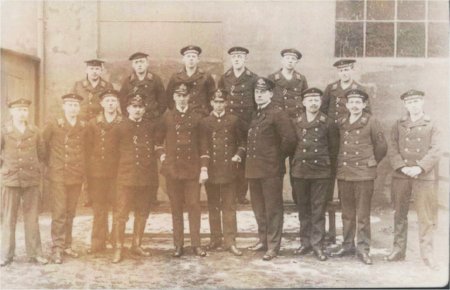
The crew of the
Naval Zeppelin L10
The early Zeppelins, such as the L10 which bombed Woodbridge, were no match for the air defences that Britain built up. Four Zeppelins had been brought down over England, three of them in flames, in a little over two months in late 1916. Their most effective adversary was the aeroplane. The best defence for Zeppelins was to fly at much higher altitudes.
The new L40 class Zeppelins, which went into service in in 1917, could operate smoothly at 17,000 ft. One of the airships delivered in the spring of 1917 was the L48, which had a control gondola which was much lighter than her sisters and other improvements that fitted her for a new wave of raids. German records show that L48 made her first flight on 22 May 1917 and flew a total of 6,099km before crashing at Theberton twenty six days later.
On that fateful day, L48 crossed the Suffolk coast a little north of the Deben at 17,000 ft and headed towards Ipswich, dropping nine high explosive bombs on Falkenham, sixteen on Kirton and three on Martlesham. They fell mostly in fields, doing little damage. But that and ground anti-aircraft fire made some people think that a naval battle was happening.
At 3 am L48 received a radio message from a German observation ship in the North Sea. It reported a good westerly at 13,000 ft, which would blow the Zeppelin safely home. However, L48’s luck ran out over Harwich harbour. Her forward engine failed, her rudder controls were faulty and she started to loose height. Worse still an air attack was under way. L48 started drifting from side to side and, instead of going east, turned north towards Aldeburgh and Leiston at a height that favoured three fighters from Orford Ness. They all shared the credit for downing her.
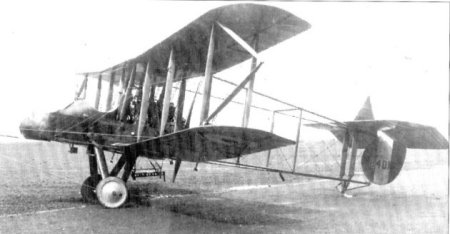
Three of these Ipswich built planes brought down the L48
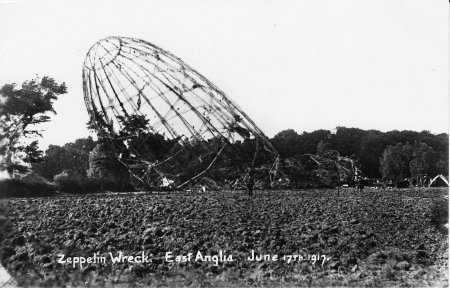
Wreckage of Navel Zeppelin L48 at Theberton on 17 June 1917.
Last edited 13 Sept 21