Evolution of the Town and its Maritime Trade
The Impact of the Railway on the Port
After the railway was built the maritime trade of the port started a protracted decline. From about 1860 ketch barges such, as the one shown in this photograph, replaced schooners because they required less crew and were of smaller draft. Nevertheless, the number of vessels using the port declined and the number leaving without a return cargo increased.
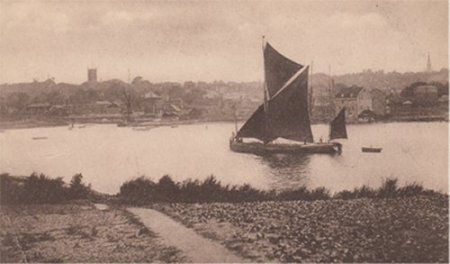
A ketch barge leaving Woodbridge.

A ketch barge by Woodbridge Station circa 1920.
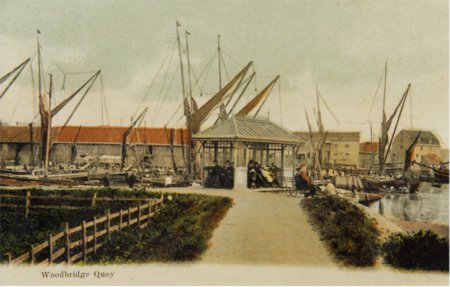
Eventually, on 31st March 1882, Woodbridge ceased to be officially classified as a port but this did not stop some barges, such as the one shown in this photograph, from using the Woodbridge quays.
Robert Skinner used barges to sell coal along the riverside to people who found it more convenient than collecting coal from Woodbridge or Melton railway stations. The last work he could find for his barges was to carry shingle up from the Deben Bar for building material. He died in 1935 and after that, as shown by this photograph, the quays were full of laid-up barges.
What remained of the town’s maritime trade was left to the steamers such as the Fairy which, in this photograph, is delivering coal to Sun Wharf.
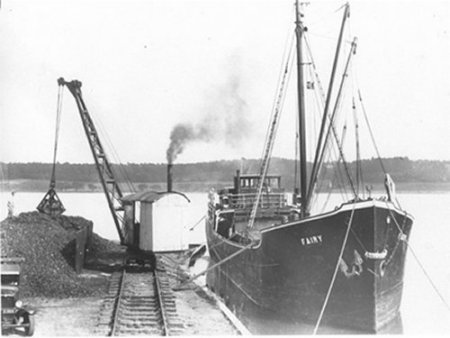
The steamer Fairy unloading coal at Sun Wharf.
Dutch coasters, such as the one shown here, brought cargoes of dried peas to Woodbridge's Canning Company warehouse at Sun Wharf for a number of years but their final delivery in 1939 marked the end of Woodbridge’s maritime trade.
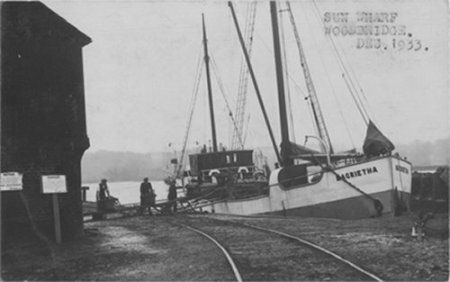
A Dutch coaster delivering dried peas to the Woodbridge Canning Company's warehouse at Sun Wharf.